


- What College Softball Coaches Look for in Recruits
- How to Build a Strong Softball Recruiting Profile
- Creating a Skills Video That Gets You Noticed
- The Recruiting Timeline Every Athlete Needs to Follow
- How to Get Exposure Through Camps, Showcases, and Communication
- Trust Your Gear When the Coaches Are Watching
The Short Answer: To get recruited for college softball, you need to start early and treat it like a real process. Build a complete recruiting profile with your stats and academics, create a clean skills video, and get exposure through camps, showcases, and travel ball where coaches are actually watching. From there, target programs that fit your level, stay consistent with communication, and keep your grades strong while you actively reach out to coaches before they can contact you.
Getting recruited for college softball is less about being discovered and more about actively working the process yourself. Every year, thousands of high school softball players chase a limited number of roster spots, and the players who end up with offers are usually the ones who started early and stayed organized. The players who break through usually do a few things well: they understand what college coaches are looking for, build a strong recruiting profile and game film, stay ahead of the recruiting timeline, and put themselves in front of coaches at the right events.

What College Softball Coaches Look for in Recruits
College softball coaches evaluate far more than raw ability. Talent gets you on the radar, but coaches build rosters around the right fit, which means they weigh several things at once.
What coaches evaluate:
-
On-field performance and consistency
-
Attitude and coachability
-
Academic eligibility and GPA
-
Position-specific fit for their roster
-
Game IQ and composure under pressure
Two talented players with similar softball skills can get very different responses when one shows better body language and a willingness to adjust after a mistake. Coaches see plenty of talented athletes every weekend, so as a prospective student athlete, the way you carry yourself is often what separates you. College coaches are projecting how you will handle the collegiate level, where every opponent is good and failure is part of the game. A player who melts down after a strikeout is a risk, while a player who resets and competes is one a coaching staff can develop.
Finding the Right Division Level
Fit also means targeting a realistic division level. Be honest about your softball skills and match them to the programs you're considering so your target list stays realistic.
Division levels at a glance:
-
NCAA Division I: the most competitive and visible tier, with strict roster limits being phased in across programs and highly competitive roster spots
-
Division II: a mix of athletic and academic aid, often awarded as a partial scholarship
-
Division III: no athletic scholarships, leaning on academic scholarships and need-based aid
The money side of college softball has changed in recent years. Under the House v. NCAA settlement, NCAA Division I member schools that opt in are moving into a new structure with roster limits and more flexibility in how athletic scholarships are distributed. In softball, that means a set roster limit paired with the ability to fund more players than the old scholarship model allowed. Coaches can now spread athletic aid across the roster as full or partial scholarship offers, which raises the value of academics that help stretch roster and scholarship resources. Power conference programs are expected to participate in these changes, making every roster spot at competitive softball programs even more contested.
How to Build a Strong Softball Recruiting Profile
A recruiting profile is your home base as a softball recruit. Coaches expect one place where they can see your numbers, your position, and your film in seconds. An incomplete or outdated profile gets passed over, because a coach who cannot quickly evaluate you will simply move to the next name.
As a prospective student athlete, treat the profile as a living document. Update it after every season, and keep academics front and center, since your GPA and core-course progress tell a coach which NCAA division and which schools are realistic before they invest time in you. Most college softball recruiting now runs through these profiles paired with direct email, so a clean, current page works for you even while D1 coaches are not yet allowed to write back. It is one of the simplest ways to stand out early in the recruiting process.
Recruiting Profile Checklist:
-
Updated stats (seasonal)
-
GPA and test scores
-
Position and graduation year
-
Height, bats/throws, and key measurables
-
Game film link
-
Club and high school team info
-
Contact info for athlete and coach
Creating a Skills Video That Gets You Noticed
Coaches lean on video before they ever see you live, which makes your skills video one of the most important tools you own. Lead with clean, repeatable mechanics and put your best work first.

What to capture:
-
Hitting from multiple angles (front, side, open)
-
Fielding reps at your primary position
-
Throwing across the infield or from the outfield
-
Pitching sequences, if you pitch
-
Timed speed, like home-to-first or a 60-yard dash
Fundamentals Over a Highlight Reel
A highlight reel of standout plays has its place, but flashy moments often matter less to a coach than raw, well-shot fundamentals. Music and big plays can actually hide the mechanics coaches need to evaluate. A highlight reel can introduce you and a shorter clip can show your range, but neither replaces clean, repeatable reps shown consistently across multiple clips.
Video Checklist:
-
Best rep first, with every clip labeled
-
Clean, repeatable mechanics over highlights
-
Multiple angles for each skill
-
Tight runtime, around three to four minutes
-
Hosted online and linked in every email
The Recruiting Timeline Every Athlete Needs to Follow
Recruiting rewards the proactive, and it runs on a calendar. Players who build visibility during freshman year and sophomore year hold a real edge, while athletes who wait until senior year find that many roster spots and scholarship dollars are already committed elsewhere. Starting the college recruiting process as an underclassman, ideally by sophomore year, gives you time to be evaluated, fix weaknesses, and build a target list before offers go out.
When College Coaches Can Contact You
The key thing to understand is timing. NCAA Division I softball recruiting is structured around specific contact rules and recruiting periods, with September 1 of junior year traditionally serving as a major milestone for direct communication in many cases. Coaches can evaluate players and attend events well before that date, but formal recruiting conversations are restricted by NCAA rules. Athletes can reach out to coaches at any time, so the smart move is to email early, introduce yourself, and build awareness before official communication windows open. Reviewing the official NCAA recruiting calendar helps keep your outreach aligned with current rules and timelines.
Key D1 softball recruiting dates:
-
Freshman year to sophomore year: focus on developing skills, building game film, creating a recruiting profile, and reaching out to coaches to introduce yourself and your interest
-
Junior year: recruiting activity typically ramps up, with more serious evaluation, campus visits, and ongoing communication as athletes and programs begin narrowing fits
-
Senior year: final decisions are made, including official visits, commitments, and signing. Athletes must also complete NCAA academic requirements, including 16 core courses and eligibility standards set by the NCAA Eligibility Center
Official Visits vs. Unofficial Visits
Two quick definitions for the visit phase:
Official visit: A campus visit paid for by the school. For D1 softball, these open up on September 1 of junior year. Lining up an official visit at a program that has shown interest tells you whether the school fits you as well as the team.
Unofficial visit: A campus visit you pay for yourself. You can take an unofficial visit any time and as often as you want, and many players take several before a single official visit is ever offered.
Academics and Eligibility
Academics sit underneath all of it. To compete at the D1 level you need 16 NCAA-approved core courses and a minimum 2.3 core-course GPA, and 10 of those courses must be finished before senior year. Register early so your transcript and test scores are certified by the time offers come. The NCAA's Play Division I Sports page spells out the standards in full. Layna Ayala, a Class of 2027 Melbourne High School standout committed to Florida State softball and a BRUCE BOLT athlete, found during her recruiting journey that grades carried more weight than she expected:
"Grades and test scores mattered a lot. One of the first things they asked for on every single call was to see my grades. It surprised me that every single school asked, because I only expected the higher academic schools to."
The recruiting funnel: The gradual narrowing where thousands of athletes are evaluated, but only a small group advances to offers based on performance, academics, and positional need.
Thousands of high school players enter the college softball recruiting process, and coaches keep filtering by skill, film, performance, academics, and positional need until a small group receives offers. For a prospective student athlete, the goal is to keep doing the things that keep them in that evaluation pool. Staying organized through that recruiting journey is what keeps you in the funnel as it narrows.
How to Get Exposure Through Camps, Showcases, and Communication
Coaches cannot recruit players they never evaluate, so exposure becomes the priority.
Where to Get Seen
College camps and showcases: In-person evaluation events where coaches watch and compare recruits side by side. They are often the fastest way onto a coach's list.
Where coaches evaluate you:
-
Travel ball and showcase tournaments
-
College camps, especially at your target schools
-
A strong travel team with a real schedule
-
A major tournament on the national circuit
A single showcase weekend can put you in front of a wide range of college coaches at once, which is why club ball often delivers the most return on your time. Different paths work for different players, so build a schedule around the events where the coaches you want will actually be, and where a coaching staff is set up to evaluate.
Reaching Out to Coaches
Exposure only converts when you communicate. Athletes who email coaches directly, follow up, and send updated video stand out, while silence can cost opportunities.
Put in every coach email:
-
Name, graduation year, and position
-
High school and club team
-
Key stats and measurables
-
Game film link
-
One or two specific reasons their program fits you
Layna learned that focusing on the right schools beats contacting every program:
"Being very straightforward and short but effective was good, because it saves you and the coach time. Most players get reaching out wrong by emailing about 200 schools instead of the ones they are most interested in and fit them most, without doing their research."
Pick the college programs that match your level and your goals, do the homework, and reach out to them directly. A focused list of schools where you are a real fit will always outwork a mass email blast.
Trust Your Gear When the Coaches Are Watching
When you step into a showcase or camp with coaches lining the fence, you want everything you can control already taken care of, including your equipment. For Layna, that means her batting gloves. She points to grip and feel as part of her confidence:
"I don't like thin batting gloves because I can feel the bat too much. I also like a good grip around the wrist because it makes me feel secure."
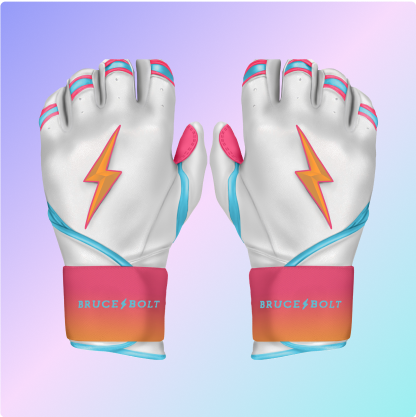
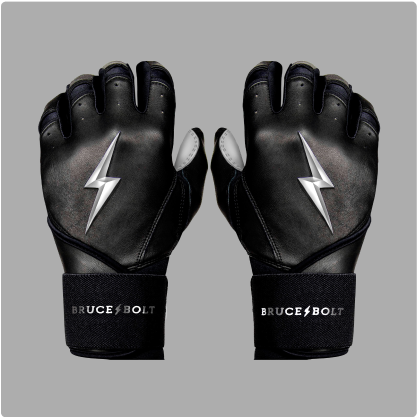
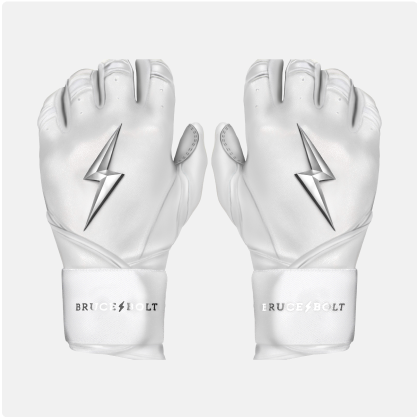
BRUCE BOLT batting gloves are built from premium cabretta leather with a secure fit through the wrist, giving you the same locked-in feel Layna describes when it counts most.
Getting recruited for college softball comes down to starting early, doing the work coaches can see, and showing up ready. Control what you can, trust your preparation, and gear up with BRUCE BOLT.